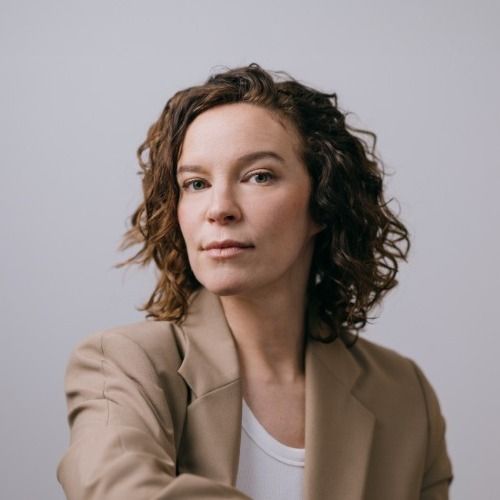
How to navigate a professional pivot that feels like a step backward when it's actually a step forward?
🎙️You’re sailing along in your career, you’ve got the experience and respect to go with it. Then you realise to do what you really want to do, you’ll have to change tack, change your boat, let go of the hard-earned position, the esteem of your colleagues/peers and head off into the unknown.
How do you navigate these transitional waters and the feelings that come with change?
Marni Heinz, Go-To-Market Expert at Datadog and Leadership Coach is not afraid of following what feels right to her, no stranger to charting a new career course and knows the direction in which she needs to go, yet even with this knowledge she still finds the period of transition the hardest one. She seeks out the advice of
🔹Lesly Simmons, Owner and President, Mobius Toys, Former Head of Community Innovation at Amazon:
🔹Noel Pacarro Brown, Author and Thought Leader in Sustainable Finance:
and Christine Renaud, Braindate (Host)
to dig deeper into: How to navigate a professional pivot that feels like a step backward when it's actually a step forward?
Covered in this episode
- Going against the grain but staying true to oneself
- Life pivots
- Unpacking the question
- The role of time in pivots/overwhelming periods
- “Repotting the plant”
- Spotting the invitations to go deeper “good content”
- What anchors us in times of flux?
- Business timelines vs personal timelines
- Shifting one’s mindset
#TheMoretheBrainier #careerpivots #braindate #careertransitions
Subscribe to find inspiration, algorithm-free perspectives and good conversation at The More the Brainier. To contribute to the discussion, join us on Braindate’s LinkedIn post about this episode of our show or send us an email at TMTB@braindate.com
This episode of The More the Brainier was produced by Christine Renaud and Jane Gibb. Editing and sound engineering by Jenya Sverlov and Chris Leon.
Transcript
Welcome to the More The Brainier, the brave space where creative minds come to share and solve their most pressing burning questions. From Montreal, I’m your host, Christine Renaud, CEO of Braindate. Over the last decade at Braindate, I've seen firsthand how knowledge-sharing discussions can be transformative, how unexpected insights emerge when brilliant minds think together. Feeling stuck on a challenge? Sometimes all it takes is a fresh perspective or three to light the way forward.
It's been a while. We had a break over the summer and we've got one more super series for our listeners this year. In the studio with me today is Jane Gibb, our creative producer. Jane, what are the themes and guests for our last series for the year?
Jane Gibb (:Hello dear listeners. Yes, this is our final series this year and we've got three great guests who are going to hand us the challenge of aligning our values and connecting seemingly disparate goals. Noel Pacarro Brown, author and thought leader in sustainable finance, Marni Heinz, Go-to-market expert and leadership coach and Lesley Simmons, Technology Communication and Marketing Expert and former head of Community Innovation at Amazon and now President of Mobius Toys.
This month we'll be unpacking how to stay centered when everything around you is moving.
Christine (:Thank you, Jane. Noel, Marni and Lesly. Bonjour and welcome back!
Lesly Simmons
Hello.
Noel Pacarro Brown
Glad to be here!
Marni Heinz
Thank you for having us.
Christine
So today's episode is all about life pivots, our changes, and having the courage to listen to what's true to us despite what it could look like to others. So let's jump right in. Is there a situation where you were going against the current, but you felt that it was right for you? So who wants to get us started? Noel?
Noel (:Great. I was in a board meeting and I think I'm not alone when I say that some of us will step into board leadership and be the only in some way, name your box, but oftentimes it has to do around gender, people of culture, et cetera.
And it was in one of these board meetings and we were having an important conversation around inclusion and how we would strategize inclusion as a part of the organization’s strategic direction. And there was not consensus around doing this. And so I felt like I was going kind of across or against the current. But I had established trust with my board members and I felt very grounded that the direction was a strategic one, not just a personal interest, because of the changing landscape of this particular organization as well, that this was a necessary direction.
And so even as the person next to me authored all the reasons why he thought it was a bad idea, I quietly put my hand on his forearm and I said, let me help you in a very calm and compassionate way. And because we had established trust, we were able to move through some of his concerns and really address the personal issues in order to get to the strategic ideas. That's my example
Christine
I love it. Thank you. Lesly?
Lesly (:I have a similar situation to Noel's. I remember being a part of a leadership conversation where we had spent a lot of time and money as an organization commissioning a survey and a report about employee sentiment on a specific topic. And once that report was shared with leadership, a lot of us on the team really felt like, okay, great, we know this. How are we going to implement this in you know, in practice.
And the feedback from our most senior leaders in the room was that, okay, great, we have this information. Let's keep this separate. We have our business structure, and then we are going to have these other conversations. When that was maybe like one of the third issues in the report from that we just commissioned the separation of priorities.
And so I had to raise my hand and remind everyone if we want to be successful, we have to listen to the feedback that we have and start with this. We cannot separate these things out. Our employees are telling us they don't want this. If we did a survey with our customers, they'd probably say the same thing. And I similarly got pushback from some executives in the room, but because I had earned the trust of others and I also had data to support my statement, we were able to move forward.
So it was just a moment of hearing the voice and being comfortable speaking truth to that powerful voice and having support amongst my colleagues to ultimately be effective.
Christine (:I'm curious to know about the practices that help us to sustain that strength because it takes courage and it takes for us to be very grounded in our truth to be able to stand up when we're putting sometimes ourselves in jeopardy or at risk in many ways. So I'll be curious to ask you about that. But I would love to hear Marni, if you have a story to share on that topic.
Marni (:Yeah, for me, something that's more of like a bigger life decision that I made that felt like going against the grain in the moment that I did it was well, from 2000, probably 18 to roughly 2022, I was doing a lot of training and certification and becoming an executive leadership coach, career coach, sales performance coach, and invested time and energy in terms of training and doing it one-on-one.
I was working at Salesforce at the time. I was very fortunate to be able to coach leaders inside of Salesforce as well. But there was always going to be a moment where I had to make a choice because it was getting to be too hard to do the coaching as well as the corporate job both at the same time.
de the decision in October of:It felt like a going against the grain because it is so hard, as many of you know, to make it into leadership, one, in the corporate world, but as a woman especially, and in the sales profession. So I was walking away from something that was a huge accomplishment. And at the same time, my heart was telling me it was time to pursue something different. So it definitely felt like a going against the grain from what society tells us we should be doing.
Christine (:And I think it's the perfect segue to your burning question, Marni, that we will talk about in just a second, but I would love to introduce you first as our second guest.
So I'm excited that we reconnect because we actually met through your work at Salesforce, which is a client of ours, and through your mentorship of our CRO, who just has wonderful words to say about you. So Marni Heinz, you are a go-to-market expert and a leadership coach and you also have the secret dream of becoming a professional scuba diver.
Can you tell us something about one of these hats that you love to wear?
Marni (:There's a lot of hats. I'm going to latch on to the last one only because it probably reflects what we'll be headed to next year. My secret dream to become a professional scuba diver, I don't actually know if I could become a professional scuba diver only because I have trouble navigating underwater. So I would not be the best guide. I would get everyone lost.
That said, I have a love of being underwater. I actually just most recently was in the Red Sea for three weeks, scuba diving there on two different living boards, got the chance to see amazing coral, big collegics, sharks, dolphins. And over the past, I think, year and a half, two years, I've got the chance to go to the Red Sea, Palau, Raja Ampat in Indonesia. These are places that are like top 10 diving destinations in the world. And I feel like when I'm underwater, I get the chance to be in a place of calm and I'm more present and also in nature. And so all of those things feel like it brings me back to my core.
On my last diving trip, someone shared with me, they're like, oh, what does your name mean? And they looked it up and they're like, it means of the sea. So according to Google, my name Marni means of the sea. I was like, oh, that's so fitting.
Christine (:That's wonderful.
And so it would be the time for you to share your burning questions with us and feel free to include any context that might help us to understand it better and be able to contribute.
Marni (:Yeah, so can share a bit of context first, you know, going from corporate America leading as a leader and then from there moving into my running my own coaching business and doing that for two years. That was from 2022 to just recently this past January.
The reality is running my own coaching business at a point in time when I think two weeks after I left Salesforce, layoffs started getting announced and rolling layoffs. And then there were layoffs from other big tech companies and then startups and in the Bay Area where tech is kind of the industry. It just seemed to be never ending. And so people, feel like we're more so in a place of fear and coaching is considered discretionary. So whether it was at the individual level or at the corporate level, it was just not something people are spending a lot of money on.
beautiful Victorian built in:In year two, was like, I'm going to go do what is part of my life's passion, which is travel and adventure and still do the coaching. And so was in Argentina for almost six months and then Colombia doing coaching while I was also traveling and exploring. I got to Patagonia, a range of places that I would only get the chance to do if I had that amount of time. And then I did decide I would jump back into corporate and in jumping back into corporate, I had time to pause and reflect before I made the jump. And so I kind of used my intuition and I said, you know what, I really want to go back into an individual contributor role because I love working with customers directly. I also love that it gives me a bit more flexibility in terms of work-life balance.
Being in a sales leadership role can be super stressful and challenging. And I just wanted to have a bit more balance at that point in time. And it's also can be very financially rewarding. And so it just had the mix of things that I was looking for at that time. And then I did move into the individual contributor role at Canva and I'm at Datadog in sales. And I'm finding that it's like a little tricky to go from leadership. And then I go from leadership to running my own coaching business and coaching leaders and then individual contributor. So there's a lot of identity shifts. So my question actually is tied to all of that. When I asked the question, it was probably within the first few months of moving back into an individual contributor role in sales. It's how to navigate a professional pivot that feels like a step backward when actually it's a step forward.
Christine (:Okay, this is great. Thank you, Marni.
Lesly, would you like to get us started with the clarifying questions? So just as a reminder, the clarifying questions part of this discussion is all about trying to understand Marni's question better. So when we come to the coaching part, we're fully equipped to give great insights and feedback. So right now, Lesly, I would love to hear your clarifying question.
Lesly (:Thank you. I wanted to really confirm with you when you're talking about something looking but one way and potentially being another way, who's the looker, who's the watcher, and how are you then defining that? Because you are clearly seeing it one way and it sounds like maybe you're visualizing that others are seeing your actions in a different way, maybe even a potentially negative way. So I'd love to talk a little about that.
Christine (:Lesly, I will carry that question with me. I think it's such a powerful question. Who's the looker? And sometimes there's actually no lookers. Sometimes it's just ourselves looking back at ourselves. But Marni, it's your turn to answer.
Marni (:Yeah, no, it's a very good question. And I had to pause longer than usual to place the question and check in with myself.
So in the moment when I shared this question, and in full transparency, I'm in a different place with the question even myself today, because I think I submitted the question, could have been within the past three to six months. So there's movement, which is a great thing in life. But at that moment in time, it definitely was a self-reflection. So the looker or the observer in that moment in time I think was me, but it could have, it could have been combination of me and others. And the reason why I share that is because it's really a question, I think about identity and that moment that I asked the question, it was the experience I was having is, you know, feeling like I wanted to have this really strong voice and share recommendations and a work context as an individual contributor and feeling like when I did share, like my voice wasn't always heard in the same way that it was in a place where I was formerly a leader or the person that had 10, 12 years of experience that everyone looked up to and honored and respected.
And so it really was a personal identity of these changing identities and these changing roles that we sometimes put ourselves in, as well as the learning experiences and the uncertainty that goes along with it. Like, who am I in that experience? what is the experience I'm having in that moment? So it was like really how to navigate those pivots. it's really the moment of the pivot.
And when you're in the pivot going from one other thing to a new thing, wow, it is so jarring. It's like culture shift, but at the identity level. And so that really was the experience I was going through at the time, which I expect I will continue to go through in life in general. So this is a life in general question that I've presented.
Christine (:Hmm I love it. Noel?
Noel
When I hear you speak about that moment of time in the pivot, it makes me think about the concept of time itself. How we feel like we're moving forward versus moving backward. What kind of time frame are you allowing yourself in this pivot or in any pivot to feel that it's from a feeling to an actual, right? Feels like backward, but it's actual step forward. What kind of time frame are you allowing yourself?
Marni (:That's a very good question. The first thing that comes to mind for me is, I think it's Clifton Strengths: I'm an achiever. What that means is I'm very impatient and I want to see results quickly. And so those moments of pivot, I know they exist in life in general and I have a rough idea. I remember speaking to someone actually who is a former Salesforce and worked at Google and then moved on to a startup and he shared every time he changes roles or jobs or companies. there's about a six month period he needs to just adjust.
And it's like, I feel like that really landed with me at the time and it felt about right. And it's just to adjust to a new place, a new way of being, get up to speed, all the things that go along with it. And I was in the six month window. I was wanting it to probably go faster, which is in my nature. And I'm also going through that same experience now, but it has a different tone, I would say, or a lens to it.
So it's like, yeah, how do I live in the messiness of that middle part, the pivot, knowing that it's going to end up in a really positive place and it's going to be forward? Even when I asked the question, by the way, I knew that the pivot I had made was there to serve me. It was actually a step forward, and I just needed time.
Christine (:And that's my question right now. So you asked this question about three, four months ago when we were discussing before we were recording, I was asking you, do you want to keep the question? Like, is it still relevant for you because we can change? And you said, no, no, it's still relevant for me. So how is it still relevant for you right now, this question? How does it apply in your life as if your current job change and where you're at now?
Marni (:Yeah, I would say right now it feels like I it's weird because it feels like for the question and the feeling tone it had for me in the moment that I asked it, because it felt like a voice not being heard kind of moment.
The current moment, I don't have that same vibe. So I feel like I'm out of that transitional period. I'm going through another transitional period, but just have like the same feeling tone. So it feels like I'm in that forward momentum. Also worth noting, I also feel like I have a better sense of identity with myself and what I want. And that means across different parts of my life.
So I really strongly want to be able to go on more scuba diving trips and go to Argentina and travel and have this life outside of work that really is joyful and fills me up while also having this work part of myself.
I just like the complementary aspect of where things are right now.
Christine (:And so if you were to give us an indication of what we should be talking about to support you with that question at this moment in your life, where, and you mentioned like, you're in a new transition. Can you put some words onto this new transition and how we can support you?
Marni (:I actually still want advice on how to not be so impatient during the messy middle! Only because I found myself in a lot of messy middles over the past two plus years. I did a lot of identity shifts, as well as unexpected things happen in my life.
And, you know, what I suspect or imagine is that's going to continue happening, because that's how life works. And I would just like to know in general how to navigate those pivots without feeling like I'm getting dragged down or pulled into them in a way that kind of feels, the feeling of it is overwhelmed is the best way to put it. So I think it's a lifelong pattern thing that anything that people share will be helpful because it seems to be like a recurring theme.
Christine (:You're an adventurer. So you'll always be navigating new waters. So how can we support? I love this. Okay. I'm excited I have things to say.
Now it's your time, Marni, to be pampered so you can sit back and relax. Grab your tea, your sparkling water, whatever you have, and it's time for Noel, Lesly, and I to do the work. So who wants to start with wisdom? Noel?
Noel (:Yes, thank you. Marni, I'm so excited about the elements that are you being from the water, from an island. I get that.
Also the impatience, I identify with that 100%. But also what it means to be in new context and how to use those moments for greater resilience as opposed to frustration.
And I just want to take a step back and have us go underwater the way you love to do, which is growing up, one of our favorite things to do would be to go to Waimea Bay and grab a rock and sit on the bottom of the ocean and look up at the sun as it would pierce through the surface of the water and just really look across and just be enveloped by the beauty that is these rays of light coming through the water. And if you were focused on, I can't breathe underwater, or if you were focused on, are there any sharks here? Or if you were focused on like, uh-oh, I need a heavier rock and I keep coming to the surface, then we wouldn't fully grasp all of the beauty that was right there. And it took practice. It wasn't the first moment that we were able to really enjoy that. But after you do it over and over again, then you learn little tricks of the trade. Like when you're down there, if you need air, you swallow, right? That allows you to stay down a little bit longer. If you're not stressed, then it allows you to really sit and the breath lasts longer.
So that's my first metaphor because you love scuba diving is this idea around one of your favorite places is when it's quiet and yet there is that pressure, but you've learned how to enjoy that. And so maybe that can carry you in these moments. So that's my first.
The second really has to do with this idea that you are a very strong and growing plant that's been repotted multiple times and you continue to repot yourself, but just like a repotted plant, like you can't expect it to grow fruit like in the first moment. The stronger the roots, right? The more resilient it will be. It'll be in a new format. We have to determine if it's the right pot for you. But then I love what you said about you're very clear now on the things that bring you the most creativity and life as a requisite for staying in that pot. I think of that as the roots going down and the leaves going forward and up and really reaching for that. So you've done both things. You know yourself, you've grounded yourself, and that allows you to really use that pot for what it's meant to do. And what a blessing for those that are that pot for you, that if you're really happy there, you're going to bear fruit, you're going to do everything that you need to do. and it'll be your decision based on the intuition you have around your roots and your growth.
And then the last thing I would say is because you are in coaching and you know that naming friction and impatience as great content for where your pressure points are in terms of your growth, right? And we say this whenever, bless my partner, he is very much the primary parent in our relationship. And whenever he's...really ticking me off. I'm like, wow, you're giving me good content. It's teaching me about myself and it's teaching me about the things that it's not necessarily him. There's stuff from my history. Anyway, you know all this well, but I would name that in those moments to see them as an invitation to go deeper and know yourself more that that is going to be a way to get you through the impatience. Oh, these folks are giving me so much good content today.
Christine (:It's so interesting, Noel, that you're talking about the ocean and the water. And I'm currently writing, and I just yesterday morning wrote a story of myself almost drowning in El Salvador. And I survived. I'm fine. But, and it's so interesting what you're saying, because when you were speaking, I was seeing the light that you talk about. I was seeing like being under the water and looking up as a child holding your rock and just being in awe of this light peeking through the water and have the exact same image of when I was almost drowning and a wave came and swallowed me. And I see myself looking up and seeing the light so far. And for me, that was a moment of that light, that same light through the same waters was a moment of despair because I was like, I won't make it. I won't be able to swim upwards and then to the shore.
And so it made me think about how the feeling of safety is so important that that's the feeling I did not have. I was not safe, but you were. Even if you're holding your rock and you can let go of the rock and you can just step up and then you're free. And I was thinking about you, Marni, and just thinking about in these moments of turbulence, what can make you feel safe? That even if I'm underwater and I see the light, I'm safe, I'm in control.
What is it? What is the core of you, of your work, of your identity? You mentioned identity many times. What is the core of that identity that makes you feel safe and makes you feel, got this, I'm safe in this core?
And each time people talk about a pivot, I always think about, I don't know if it's the same in English, but we have the word pivot for basketball. When you have the ball and you have one foot and you're allowed to move your other foot. And again, I was thinking about you, Arne, and thinking about where is your foot? The foot that can't move but is anchored, what is it anchored in? Because I think that's the strength and that's the safety and that's the guiding light. Lesly?
Lesly (:Thank you. So Marni, something that stood out to me when you were talking is just your focus on patience and time and the idea of the six month window or whatever that is for each individual. And something that I try to remember often is that a corporate or a business timeline and a personal timeline can't be the same. It's just not really possible.
And yet we are so conditioned to think I should be able to knock this thing out in three days, a week. Why am I not getting this done in our personal lives in the same way that we give ourselves deadlines at work where I don't know the size of your coaching business, but I would imagine you probably don't have the teams, the budgets, the resources, the infrastructure that you had at Salesforce.
So that I think is probably the biggest shift is just getting that sense of timing down to what is realistic. And I think that also then takes you back to what you said. You know that you want to be in a space where you're doing work that you love and you're able to travel and you're able to support people with the expertise that you've gained over the years.
And you can make that fit together when you're comfortable with setting your own concept of time. But I think that then brings you back to something that we talked about in the beginning, who's the watcher? Are we looking for external recommendations and support and validation or internal? Obviously we need both, but it can be really hard when you're so used to talking about your productivity, your accomplishments and then suddenly you're building something new and it's slow to start. It's not as big. It's not getting there in the timeframe that you might want. I think so many of us feel like we failed in those moments when in fact, that's the point of the real knowledge and that's the real transition moment if we're able to stick with it.
I just wanna share a quick story of someone that I'm close with who for many years run a very successful restaurant only because of this global pandemic was he forced to close his restaurant as so many other people were. And yet he was able to still transition into other very successful businesses. And this was about three years ago. He told me that he's still so upset and feeling like a failure because his business closed. And I said, you ran a business for eight years wildly successfully until a global pandemic forced you and many other businesses to close, honey, you're not a failure. You crushed it! Like, what are we doing now? Like, what's next? Let's go. But he had that mindset. And so much of what we're doing is just walking in those patterns. And if we're comfortable stepping outside of that, I think we can see the value and the beauty in what we're building for ourselves and encourage others to ultimately do the same.
Christine (:I'm so grateful for this conversation. So rich. Thank you, Lesly and Noel.
Marni, any takeaways, you are now granted your right to speak again? Any takeaways or next steps or anything that resonated with you that you would like to share?
Marni (:Yeah, I'm happy to share. I loved in particular, Noel, the image and imagery of the analogy that you used, as Christine noted, of sitting at the bottom of the ocean with a rock and just looking up at the light and how grounding that can be and the importance of not being a place from which you can see more clearly and there's clarity. So I will take that imagery with me. Nicely done and creating that for, I would say, for more than just myself, but all of us.
And then also the metaphor of the plant and the changing of the pot and the importance of having the roots because the pot itself might change, other elements might change. And if you've got really strong roots, you know, there's the possibility to bear fruit. And if the fruit doesn't bear, you can always just change pots. it's also a very nice metaphor for navigating life's pivots.
And then Christine, thank you so much for your share of at the end of the day, like what represents safety for one person can look different for another. Like I can share a bit. Fundamentally, my job title has changed from the place I was just at, Canva, to where I'm at now while we're doing this podcast interview. things feel different. so fundamentally, the job title is the same, fashion is the same, a lot of things are the same, but something's a little bit different. And so there's this idea of even in that context of the analogy of being in the ocean, you can still be in the same kind of general context. But as things change around you, it's a totally different experience.
So having that reminder of the importance of safety and feeling just like literally fundamentally safety within one ourselves, you know, often we use the term psychological safety and how important that is to be in that environment.
And then Lesly, thank you for your contribution. just heard like the sense of time being so, so important to always keep in mind as well as that place of pivot being the place of knowledge, growth, you know, the next thing that's coming on and to also just remind ourselves, you know, when ending becomes a new beginning and that is the place of success and growth and so much more. So thank you for that as well. Those are my takeaways. I'm going to actually listen to the podcast later because there was more than what I could take in all at once. So thank you to everyone.
Christine (:I appreciate it, Marni. Thank you. I thought the same. I was like, this is a good one. It's good for me too. It's so interesting what happens when you're in a conversation like this. And we just build this shared experience, shared knowledge. And it's so powerful.
I'm really grateful for everybody's contribution. So thank you. And thank you, Marni, for your candor. And Noel and Lesly, thank you for your generosity.
And many thanks also to Jane Gibb, our creative producer here at The More the Brainier, and to Jenya Sverlov and Chris Leon, our delightful sound engineers.
Jane (:Yes, thank you all. If you have a contribution to Marni’s burning question, please share it on Braindate's LinkedIn page, where we'll be posting this episode, or send us an email at TMTB@braindate.com. We'll end today's episode with a quotation from Armenian, Russian, American, science fiction and myth-punk author, Vera Nazarian:
Sometimes being true to yourself means changing your mind,
self changes and you follow.
Through Lesly's burning question on the more the brainier, we'll explore staying true to yourself through transitions and shifting goals. Join us next week!
This podcast was brought to you by Braindate, the world's leading technology that turns your event into a knowledge sharing feast, leaving your participants transformed by each other.