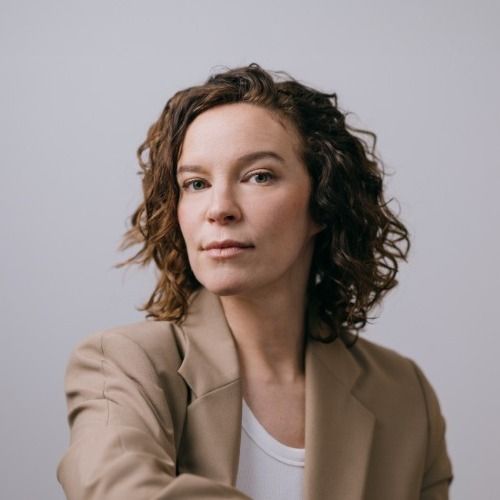
How can we keep a pulse on the shifting rules of society while also maintaining a direct line to our intuition?
🎙️You need to follow the regulations but they’re not necessarily “just” and they’re moving. How do you work towards equity in ALL senses of the word? What can help you navigate these waters? What if we saw capital as a potential healing agent for our society?
These a just a few of Noel Pacarro Brown's thoughts that come up in this episode. Author and Thought Leader in Sustainable Finance, Noel guides families to make investments and lasting legacies with their wealth. When you deal with hundreds of thousands of dollars and you care about harmony and equality, how do you ensure you are adhering to the rules of the trade and those of shared humanity? Noel knows intuition can guide us to achieve greater harmony in her line of work, but how?
Noel calls on:
🔹Marni Heinz, Go-To-Market Expert at Datadog and Leadership Coach,
🔹Lesly Simmons, Owner and President, Mobius Toys, Former Head of Community Innovation at Amazon, and
Christine Renaud, TMTB host and CEO of Braindate, to address her burning question: How can we keep a pulse on the shifting rules of society while also maintaining a direct line to our intuition?
Covered in this episode
- Memorable hosting moments
- Leadership in shared resources and sustainable finance
- Importance of place in connections
- Disparity between the profit driven aspect of world of finance and the needs of society: how intuitively it feels like the drive for profit over well-being will accrue more risk in the long-run
- How this disparity is relevant across sectors at the moment
- How to bring more visibility to this issue
- How to tap deeper into your intuition and make it more readily available
- What to look at more closely to shift one's perspective when tackling a divide
- Finding common ground
- Bringing more love and community into business
Subscribe to find inspiration, algorithm-free perspectives and good conversation at The More the Brainier. To contribute to the discussion, join us on Braindate’s LinkedIn post about this episode of our show or send us an email at TMTB@braindate.com
This episode of The More the Brainier was produced by Christine Renaud and Jane Gibb. Editing and sound engineering by Jenya Sverlov and Chris Leon.
#businesscoaching #sustainablefinance #peercoaching #intuitiveinvesting #healingcapital
Transcript
Welcome to the More The Brainier, the brave space where creative minds come to share and solve their most pressing burning questions. From Montreal, I’m your host, Christine Renaud, CEO of Braindate. Over the last decade at Braindate, I've seen firsthand how knowledge-sharing discussions can be transformative, how unexpected insights emerge when brilliant minds think together. Feeling stuck on a challenge? Sometimes all it takes is a fresh perspective or three to light the way forward.
It's been a while. We had a break over the summer and we've got one more super series for our listeners this year. In the studio with me today is Jane Gibb, our creative producer. Jane, what are the themes and guests for our last series for the year?
Jane Gibb (:Hello dear listeners. Yes, this is our final series this year and we've got three great guests who are going to hand us the challenge of aligning our values and connecting seemingly disparate goals. Noel Pacarro Brown, author and thought leader in sustainable finance, Marni Heinz, Go-to-market expert and leadership coach and Lesly Simmons, Technology Communication and Marketing Expert and former head of Community Innovation at Amazon and now President of Mobius Toys.
This month we'll be unpacking how to stay centered when everything around you is moving.
Christine (:Thank you, Jane. Noel, Marni, Lesly, bonjour. Welcome to our fifth series.
Noel Pacarro Brown (:Great to be here, thank you.
Marni Heinz (:Yeah, thank you.
Lesly Simmons (:Thank you so much.
Christine
Before we dive in, let's get an idea of where everyone is calling from. Marni?
Marni (:I am in San Francisco right now.
Amazing. Noel, I didn't know you moved even if it's been years. So it's been too long. Tell us where you're coming from.
Noel
Yes, Hawaii is still home, but today I'm calling in from Portland, Oregon.
Christine
Amazing and Lesly?
Lesley
San Francisco as well.
Christine (:Wonderful. Thank you so much for making the time. I'm delighted to have you on the show. I've known all of you for quite some years. And it's when we were thinking, Jane and I about this last series and we thought about this trio, I was like, okay, this is going to be good. I want to be there. I want to be attending this one.
So I have a story about Noel, because Noel is the first person that will go today with the burning question. And I was telling Jane when we were preparing the show, I was like, Noel is a bright star. She's somebody exceptional. I've never met anybody like that in my life.
beginning. I think it was in: Noel (:Christine, thank you so much. And I have to say that that song isn't just for everyone. The chants that we bring from Hawaii are something that only when we feel that we're invited in a space that could truly appreciate what's being offered, then it's offered. And so please know that the group that you gathered and that special time in Montreal allowed for me to feel like my whole identity and my culture was in a safe space and would be received. So thank you for remembering that. And I'm glad that it's carried you for this much time!
Christine
It's the song that keeps on giving. I've thought about this many times. I've told this story many times and it's been very inspiring to me. So that carried it in my heart. So I'm really happy you can be here today.
Noel
Pleasure.
Christine
And I was wondering for all of you, for Noel maybe to start with, is there a moment where you remember hosting a group and something special happening to this group?
Noel (:absolutely. I was with a group that was hosted by a dear friend I consider a sister. And the idea was to gather everyone and we called it Reunion because we wanted to kick it off as if it was a family reunion. A lot of folks didn't know each other, but even naming it a reunion, I think gave this idea that this was going to be special and you are welcome and you're considered family, even at the premise of the gathering. So with my dear friend, Morgan, we created, even by the invitation, this idea that you would leave your title, you would leave kind of your normal work-life identity at the door. And the invitation was to come into space with everyone else who, by the way, we all have really varied backgrounds, really important kind of leadership, influential, you know, projects that we all work on, but in that moment and for that sacred time, we were there together and holding each other in safe space in order to really imagine and dream together. And that, like, to this day, just like I'm glad that my chant has carried you for this long, that time continues to be a marker and a stone that we come back to as a group.
And we have now, I have a whiteboard in my office called “the fam” and the people that I became so close to during that time. Now, if I'm ever in a space where things are shifting this idea around, what do you do when the world is moving? They are who I come back to. And it was in this gathering that that all began.
Christine (:I mean, these moments where we feel we've met brothers and sisters that we didn't know is so powerful. And it's something we see very often with brain dates. People, as somebody told me maybe two, three months ago, you know how I knew that this conversation was successful and it was a great braindate? I said, no. And they said, because it started with a handshake and it ended with a hug. And I was like, I was like, okay, a new KPI. Yes. But these moments are special when you're like, okay, it's just, just, you know, it's a business or it's always just a, when you're able to create this moment where you know people will remember as something that was truly special. I think it's a, it's a blessing.
Lesley, do you have a moment where, where you were part of a group or you hosted and something magical happened?
Lesly (:I do, I can think of a time where I had the opportunity fairly recently to gather a group of family and friends to celebrate a special milestone. And there was a lot of debate about where to have this gathering. And I ultimately decided to have it in a space that's about 90 minutes away from the closest major city, which I knew might be a little bit of a challenge for some folks, but I thought it was also really important to gather this particular group in a space that many of them had never been and just try to get folks out of comfort zones and out of some traditional habits around the way that we would typically celebrate.
And I also sort of took the leap of inviting some folks who I knew had been experiencing some challenges in their own relationships. And, you know, at this time, I think a lot of folks are seeing this amongst their family and their friend groups. And I ultimately decided that it was important to have these people in the space, even if they weren't necessarily in community with each other. And the beautiful moments that happened that I was not expecting was seeing some of those people whose relationships had been fractured come together in this beautiful setting that they may have never been in otherwise.
And I feel really strongly that they may not have been able to release and get past what they had gone through if they'd gone to the same house or the same restaurant or the same bar that we would always go to. It was being in nature, being in a new space and building a new connection that I feel brought those folks together. And then I also saw new friendships formed and I just looked around and thought, I don't think this could have happened in any other space and I was really glad to be able to have that moment of recognition.
Christine (:I think this is so great what you're mentioning about how space actually can influence the way we connect and the way that we feel and how we're even more willing to take on an adventure, a new posture. I think that's fascinating. And Marni, any moment where you hosted where some magic happened?
Marni (:I have a group or community that I'm a part of, less a part of now than in the past, but from 2018 to probably 2021, I was going through training through neuro-linguistic programming, NLP, in the Bay Area. And initially, physically, we'd get together and take classes together, and then eventually graduated and became teaching assistants together, and then COVID hit. And what happened over time, and then we eventually kind of moved on from that program.
So for the close-knit group that I know from that community, we have to be a lot more intentional now if we want to maintain those relationships. So sometimes friends will host at their place, which is always a lovely experience. And then the community gets bigger and it's the significant others or the friends that get invited in. And even within the past month, I was the one doing the hosting for someone in the community, a good friend, her partner, was her 50th birthday. So I invited people over, extended friends came, and I just got the chance to reconnect with old friends, as well as kind of enter into conversation and get to know people that are part of that group and open up arms to have like an even bigger gathering. So it's just being intentional to maintain those friendships. And that was a really like warm welcoming experience to keep those relationships going and to extend them as well.
Christine (:This is so wonderful. And it's not a given when you meet a group of people that magic will operate. You actually never know if this is going to happen and if it can last in time. And sometimes I think it's fine that some magical moments are just what they are for when it happens. But then when you're able to sustain something like that with the busy lives that we have, it takes, like you were saying, intentionality and dedication. That's wonderful.
So let's move on to the core of our conversation. So Noel's burning question, but just before I would love to introduce you Noel. So mother of two, a master of the 20 minute meal, generational weaver, gardener, soul sister to many and lover of the light.
Noel. Okay, tell me more about your thought leadership in sustainable finance. Tell me more about that because that's when I met you, that's where I met you and I've always been so impressed on how you leverage something like personal finances to create change in the world. And I would love if you could say a bit more about it.
Noel (:Sure. I think that growing up in Hawaii, coming from islands, I think that it just gives you a sense of resources and shared resources that we have a responsibility to each other and to the place that we're from. And so when we talk about personal finances and oftentimes there's a focus on transactional and accumulation and it becomes very separate from the human experience and what we actually experience in terms of the way that we manage resources in community. So when we're looking out for each other, when we are providing for each other. And so where we've tried to weave in that shared reality as Islanders, that's been the premise from which we've built a whole practice around talking about what shared resources look like.
And thankfully there are so many people who are excited to have that conversation and move away from the kind of the transactional and cold thinking around finance, around capital and recognize capital as a potential healing agent for our society. But we have to have a mindset shift. So we talk a lot about relational wealth, you know, this conversation around movement and how to stay in the flow and all of that. It all comes back to our ties to each other and our place. So Lesley, when you named that the place allowed for a greater, higher fidelity of connection, like that is exactly to us the recipe for innovation, healing, advancement, evolution. And that is a little bit, a taste, Christine. And thank you for recognizing this is our life's work.
Christine (:This is wonderful. And I think it leads us directly to your burning question.
I would love it if you told us a bit more about your running question and I invite you also to include any context that might help us to understand it better.
Noel
Great. So you know that where I come from and the way that I think about resources is very different than the world in which I operate, working in finance, working with people directly on how they're going to allocate their wealth to kind of focus on their own personal goals, but also the goals they have for society. And the world of finance can be very mathematical, transactional. And by the way, there are many rules and it's heavily regulated. So having a key, you know, focus on that is critical to the work itself, but then also being able to listen deeply to the needs of our clients and also the shifting needs of society in order to help inform the conversation means that I'm in a constant code switch. So my burning question as we think about this work, and I'm grateful to have everyone's insight on this, is how can we keep a pulse on the shifting rules of society while also maintaining a direct line to our intuition?
Christine (:juicy. This is delicious.
I would love Lesley and Marni, if you have any clarifying questions to share. I think that would be very helpful. And just as a reminder, it's not a moment to share our advice or thoughts yet. It's really a moment to kind of dig in and try to understand Noel's burning question better so we can provide some insights afterwards. Who wants to get us started?
Marni (:I can go ahead and ask a question. I'm going to do what I always tell people not to do. So just forgive me, because I'm going to ask a two-parter. I was curious about two things. What are the shifting rules of society specifically that you're referring to? Because you mentioned finance, but I don't know if it's that context or something even bigger. And is it that you're keeping a pulse on those shifting rules, or is it on the intuition part?
Noel
I don't think it's specific to finance, whether we're in technology, whether we're in the nonprofit sector, whether we're in healthcare, there's constantly frameworks that which we have to operate and continue to guide either our projects or our people alongside. So when I say shifting rules of society, I mean broadly across sector as we do this work, right?
And then your question around keeping a pulse, I think of it as a two-part mandate because we absolutely professionally need to do the work and understand the rules and make sure to keep people along those rules because that's our systems, that's our organizations and how we all operate together in this complex world. But also in order to advance us into a moment of shared prosperity and not just sit in the raw space it requires us having a lens and a view that is rooted in intuition, where we not just see the rules, but we see where is there some flex where we can actually express humanity in a deeper way? How do we help not only our clients or the people we work with to dream bigger, but then also for us to find the pathway to yes, to create a whole new arena of possibility.
Christine (:Lesley?
Lesly
My question for you is, as you're thinking through this idea, how has this already played out in your industry in some ways that are maybe positives and negatives that you are trying to emulate or ignore as you move forward in your work, and how does that impact your thinking?
Noel
Awesome. Thanks, Lesley. So I had the benefit of living through the financial crisis with my clients. So I recognize that there is a role for regulation in order to create certainty and confidence in a system like the financial system. One of the things I can point to is this idea around mortgages and making sure we have access and that out of the financial crisis, there was this recognition around how do we create equitable, fair, and regulated access to capital. So the idea and the rules around what was implemented post financial crisis, I think was stemmed from that experience. But where I think we needed to go further was recognize that even if the rules are fair, it doesn't address access and financial inclusion enough. So what are the investments that we need to make where there's a gap between just the regulations and the rules versus how we heal an imbalance that potentially older roles or just societal values have created over time. And there's an opportunity for us intuitively to say, this might be a good setup, but how do we push further in our investment to actually address these issues?
Christine (:I'm wondering, Noel, thinking about your question, do you refer to your own intuition or more how do you help your clients develop their own?
Noel
Thank you. It's both. I'm so blessed to have incredible visionaries, foundations that work on some critical causes across the country. And so, yes, my own intuition, having been raised in the islands and understanding the push and pull of resource management when there just isn't enough for everyone, but then also integrating the incredible background and vision of the people that I interface with who have also created solutions in their own sectors.
So I have the blessing of having a mashup.
Christine
So if you have this question right now, it's because you see a gap. You come with the question because you see that there's an opportunity for more alignment or more growth. So can you define this gap for me?
Noel (:So the gap, if I'm being really candid, because here we are, I know it's more the brainier, but also there's an emotional component and also a heartfelt component that the shifting roles of society, I think, are taking us even further from, at least here where we sit in the US, is keeping us further from really addressing all the needs. And the goal of shared prosperity, I think, is shifting in terms of the rules. I think we're moving into a more transactional, almost a profit at all cost kind of model where intuitively, I think that will actually create more risk for us as a society going forward. If we are willing to abandon this perspective of shared prosperity and that the rules, there's not a, I think it's less of a gap, but more so a conflict almost that is starting to concern, not just myself in the finance sector, friends in the tech sector, friends in the healthcare sector, who are really concerned that some of the rules that we're protecting, certain groups and certain communities are going away. Other rules are advancing innovation for highest profitability as opposed to wellness across entire communities. And so these are shifting rules that then are directly affecting our work and also are creating a scenario where the direct line to intuition, I'm having to weave through some of the emotion felt around these protections that are kind of now moving away from these protections that have existed, that have been able to work alongside some of the work that we've been doing. That's the basis of this question.
Christine
Yes, I'm really happy you're asking this question. I think it's really rich. And thank you, everyone, for your clarifying questions.
So now, Noel, it's time for you to sit back and relax and grab a tea and let us treat you to the thoughts we have. So it's a moment where you're invited not to speak, but to really listen. And then we'll be happy to hear what you have to say about the thoughts we had for you. And for Marni and Lesly, it's our time to shine. So it's time for us to share the thoughts that came to mind, the path forward that we can envision for Noel.
So who wants to get us started? Lesly, would you be willing?
Lesly (:I can go first, yes, this round.
Christine
Amazing. Thank you.
Lesly
So I wrote down a couple of notes. I'll just jump in. Noel, I think so much of what you said is so powerful and it ultimately comes back to, not just talking the talk, but walking the walk. And I'm sure that you are already doing very much of this in your work, but I think the idea of continuing to model success in the financial sector while using an intuitive lens can continue to bring more energy and visibility and ultimately support into the work that you're doing. You have absolutely tapped into something that so many professionals are recognizing. You said your colleagues are, my cohort is as well. We are seeing our industries really move in directions that are concerning to many of us. And so being able to identify that concern, find ways to leverage our expertise to address it and then continue to show up and do that is the work. So I hope that folks will just continue to join you on this path. And I think the other piece that you've mentioned, because you talk, you work a lot with, as you said, foundations, family offices, organizations and entities that are really moving a lot of capital and have access to a lot of capital, who are the champions that are doing this work in their own way that you want to work with or want to emulate or just want to bring some visibility to their work as well? I think as you're showcasing, it's not just me and a small group of us that are thinking about it, but here's this individual, this group. There are so many that are doing this type of work: join us. I feel like that's such a winning combination. You're like really hitting in on a critical topic right now. And I feel like those are a couple of things that are just going to attract so many folks to the work that you're doing.
Christine
Thank you, Lesly. Marni, did you want to add something?
Marni (:Yeah, I can chime in. Yeah, another perspective to take, I kind of think when you shared your question, there were a couple of things that I noted. And one was just this huge divide between the intuition and the shifting rules of society across, whether it be finance, technology, any range of areas. And that that divide is huge. And if anything, it's growing. And how do we kind of make it come together?
And then the other thing that I noticed was on the topic of intuition and the question is we, how do we keep a pulse? So I get the impression that you have very strong intuition and how do we allow that to be available to others more broadly in society? And when it comes to intuition, that's often going inward, whether that be through mindfulness and meditation and pausing and reflecting, rather than getting wrapped up in what's happening around us.
And then something creative to do, this is like a little exercise that I've done before through my NLP training of bringing together the intuition as well as these bigger topics and these changing rules of society is, getting more clear on what our personal relationship is with those bigger topics. So what is our relationship personally as an individual with this thing called money?
So if we were to personify money, put it in a chair sitting across from us, and we had a relationship with us, what would we learn about ourselves in that relationship and the dynamic that's at play, which then shapes that broader context and pulls the two together.
And then the final thing I noticed was there's this concept, that rather than being so individual, what's my relationship with money, but also the sense of community. So it's really getting out there and doing what was shared at the start of the podcast of bringing people together in community and reunion. And then we see the shared good that we can all bring to each other. And then all of a sudden, our relationship with those changing roles of society also takes on a new lens. So I think there's an element of community mixed in there too.
Christine (:I agree with you, Marni. And what I heard when you shared your question, Noel, you were talking about intuition. And what I kept on hearing when you were saying intuition was love. You know, I felt that the presence of love was very strong in everything you were saying. And ultimately, no matter where you are in the divide and what your relationship is with, let's say, money and the rules of society and the transactional tension that we're taking on right now, all humans want, need, and deserve love. And I think this is a very, very strong anchor to all the work that we are doing in building and hosting and nurturing communities and seeing our opponents, if I may call them like that, people we don't agree with, people that don't seem to share our values, but ultimately we're all rooted in love and finding that ground, I think, can be very powerful.
And I'm writing a book right now called, Witches in Business. And it's all about bringing back those ancestral powers back into how we do business. And the first chapter is about the sacred and how witches and women in business can hold the sacred. I'm referring to the work of Adrienne Mary Brown in the Emergent Strategy and how she says that we change the whole by changing its parts. So again, embodying love in the work that we do in the way that we take on news and the way we react, I think is it always seems maybe not enough for the how big the problems seem to be. But I think that we underestimate how powerful those small gestures and that embodiment can be. I wonder, Lesley or Marni, do you have something to, a concluding remark to this section?
Lesly (:I’ll actually just add and build a little bit more on what you said, Christine, because I think that you're absolutely right. And Noel, we need more people talking about love and our feelings in business and not just the love of money or the love of success or the love of metrics. We need to talk about loving our community, loving our environment. And that in many ways does come back to intuition. I think a lot of us, especially in the workplace, have been told you're supposed to turn that off and you follow the rules of business when you walk through these doors. And then we see that challenge and that, you know, when we butt up against that experience of, I know this doesn't feel right or something could feel better, but the rules say this is the way that I'm supposed to proceed. So, yes, more of this, more of love and business, all of that.
Christine (:Thank you so much, Lesly and Marni.
Noel, it's time for you to tell us what are your takeaways, anything that stood out for you, or next steps.
Noel (:Thank you, thank you, thank you, mahalo. I just have to say that when you were all speaking and the words of love and being in relationship with self, ancestors, all of that, I was reminded of a dear friend who quotes Khalil Gibran when she speaks and she says, “work is love made visible”. And I just… that book, The Prophet, was so shaping and her work is so amazing. And to me, is the message across this entire conversation that I will carry.
Lesly, thank you for this idea around modeling it, bringing more models and naming the champions, saying, join us. I love that invitation. This is really about building on a movement in which we all get to benefit from. And so I love this “join us” kind of mentality. And Marni, I so appreciate that having grown up in a culture where you learn group identity before you learn individual identity, that you named the importance of having a deep relationship personally with the exact kind of potentially shifting rules that really kind of bring up a lot of content for you.
I remember distinctly just one story about being in a philanthropy conference, now that I do a lot more work in philanthropy and feeling like I was a visitor until, like I was outside looking in, learning the tricks of the trade, but like, I don't really belong here. Until it was named that mutual aid is philanthropy. You just don't get the tax benefit from it! And most people engaging in mutual aid could, know, percentage-wise be such bigger philanthropists than people who get the name of philanthropist.
And it reminded me of my grandfather and my whole family that would take in folks coming in from the Philippines as they were immigrating to Hawaii to work. And during my grandfather's funeral, there was a line that was two blocks long of people who just said, you know, without any expectation, I had a place. My grandfather lived at your family's place. And he said to me, if ever your grandfather passes away, go pay your respects. They're the reason we had a place here.
And I just think about how your invitation to make it personal also allowed me to feel a belonging in a conversation that doesn't know how to name the kind of aspects of this work in the same way that then I was able to adopt it, thinking of that personal experience. So thank you both and Christine as well, naming love. I feel like I've received so much here and I'm excited to help out as well.
Christine
That’s wonderful. Thank you, Noel. Thank you so much, Marni and Lesly. This was a great conversation. And many thanks also to Jane Gibb, our creative producer here at The More the Brainier, and to Jenya Sverlov and Chris Leon, our delightful sound engineers.
Jane (:Yes, thank you all.
If you have a contribution to Noel's burning question, please share it on Braindate's LinkedIn page, where we'll be posting this episode, or send us an email at TMTB@braindate.com. We'll end today's episode with a quotation from the filmmaker, writer and educator, Nora Bateson. Her work examines many fields and disciplines and looks for patterns in living systems and how they interconnect.
Finding where exactly the outside world ends and I begin is not so easy.
Next week, Marni's burning question is about changing direction. What do we need to keep in mind when navigating new coordinates or routes? Are things as separate as they initially appear? How is a step back also a step forward?
This podcast was brought to you by Braindate, the world's leading technology that turns your event into a knowledge sharing feast, leaving your participants transformed by each other.