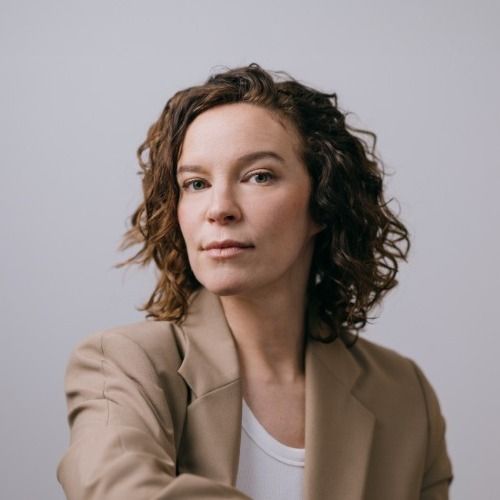
As I get older my definition of success keeps changing, so how do I manage my expectations while still remaining true to myself?
🎙️💭How do we live the divide between our vision of success, what we truly want and reality?
Lesly Simmons was formerly Head of Community Innovation at Amazon, she left it this year to acquire and run a toy company, Mobius Toys. This move builds upon Lesly’s work with The Dollhouse Project that produces inclusive experiences for children and families.
As she moves closer to work that is truly meaningful to her, she simultaneously finds herself doing work she didn’t sign up to do. She brings her burning question to:
🔹Noel Pacarro Brown, Author and Thought Leader in Sustainable Finance:
🔹Marni Heinz, Go-To-Market Expert at Datadog and Leadership Coach:
And Christine Renaud, Braindate (host)
The three women join Lesly to address her burning question:
🎙️ As I get older my definition of success keeps changing, so how do I manage my expectations while still remaining true to myself?
Covered in this episode
- Staying true to yourself when you yourself are changing
- How definitions of success have changed over the years
- Other people's success
- If not now, when? If not me, who?
- Explaining to others what feels right to me
- Inward connection, grace, compassion
- Who's the beholder?
- The fruit and the pot
- Stepping back to see 80/20
✨Find inspiration and algorithm-free perspectives through shared experience, wisdom and good conversation at The More the Brainier
This episode of The More the Brainier was produced by Christine Renaud and Jane Gibb. Editing and sound engineering by Jenya Sverlov and Chris Leon.
#TheMoretheBrainier #success #truetoself
#seasonsofchange #fortysomething
Transcript
Welcome to the More The Brainier, the brave space where creative minds come to share and solve their most pressing burning questions. From Montreal, I’m your host, Christine Renaud, CEO of Braindate. Over the last decade at Braindate, I've seen firsthand how knowledge-sharing discussions can be transformative, how unexpected insights emerge when brilliant minds think together. Feeling stuck on a challenge? Sometimes all it takes is a fresh perspective or three to light the way forward.
It's been a while. We had a break over the summer and we've got one more super series for our listeners this year. In the studio with me today is Jane Gibb, our creative producer. Jane, what are the themes and guests for our last series for the year?
Jane Gibb (:Hello dear listeners. Yes, this is our final series this year and we've got three great guests who are going to hand us the challenge of aligning our values and connecting seemingly disparate goals. Noel Pacarro Brown, author and thought leader in sustainable finance, Marni Heinz, Go-to-market expert and leadership coach and Lesley Simmons, Technology Communication and Marketing Expert and former head of Community Innovation at Amazon and now President of Mobius Toys.
This month we'll be unpacking how to stay centered when everything around you is moving.
Christine Renaud (:Thank you, Jane. Noel, Marni, Lesly, welcome back. This is the last episode of this series. I'm delighted that you're there and joining us for this conversation today.
Marni
Thank you for having us.
Noel
Great to be here. Thank you.
Lesly
Thank you so much.
Christine
Today's conversation is all about staying true to yourself when yourself are changing.
So during my master's degree, I had a seminar with Robert Keegan, who is a psychologist focusing on adult development. And he had us do an exercise where he separated us in groups of decades. So the 20s together, the 30s, the 40 years old, the 50s, 60s. And it was all about, it was all the same questions and we had to answer these questions. And then we had to share as a big group. And it was very obvious that there are seasons in life and there are waves.
Whether we like it or not, a lot of us are going through similar moments and experiences as life passes it and goes on. And it was really fascinating and it has stuck with me as, okay, I'm in my 40s right now, like, maybe these feelings I'm feeling are normal and they're part of my evolution. How has your definition of what success is changed over the years? Marni, do you want to get us started with that question?
Yeah, it's actually a good question. I would say, kind of like, kind of bigger picture, if my definition of success, probably if I look back to my 20s, maybe even more so 30s, was probably 30s is around when this happened is defined in large part by career. success and career kind of in the society that we're in, Western society is, they almost kind of converge. They're a NALYUS in a way. And so yeah, my success largely felt like it was dependent on where I was at at any given point in my career and the choices that I would make along the way related to that. I would say at this point in my life, it looks different. I would say success isn't just about career. It's almost about having a career that feels fulfilling or I'm giving back or there's something about it that sparks me or lights me up is important.
And at the same time, like I want to have, and I mentioned this before, like time and space outside of that to spend time with family, friends, do what's important to me. Also, you know, be able to be in touch with myself. And so have enough time to feel grounded and kind of do some meditation and go inward and get in touch with my intuition. Those are all things that are important to me. And so my definition of success would be to have a life that is balanced and that it's not about just the career success. And I mentioned before, I love adventure. So I want to get out there and explore the world. So success to me is being able to go to see new places and to meet new people and or connect with people whom I've already met and have and build stronger relationships. So that's what success means more so now.
Christine
That's great. Noel?
Noel
I love this question so much because
Success in the eyes of whom, right? So for us personally, I think success felt like to me when I was younger, because I do think it's generational or at least these different stages of life. And I also think about as a woman, how our bodies change and the expectations of our bodies change over different parts of our lives.
And I really do take to the learnings of many ancient philosophies about a woman's center of gravity at different times in life. There's a time and space when the center of gravity really should be from the base up through the navel, and then it should be from the navel to the chin, and then the chin, and then outwards at a later stage. And I feel that that has resonated in my work life too, where getting my grounding and establishing myself was the focus initially. And then generating ideas, to your point, Christine, you're writing a book, I say, I'm pregnant with book. It's in here, it will be birthed at some point, but it feels like a lot.
Christine
Yeah, it's as excruciating for me than giving birth, to be honest. But my pregnancy lasts like two or three years, so yes.
Noel
Same, same. And so while I know that something very important will be birthed, I also want to honor the process and the necessary length of time that a good pregnancy would provide, right? And then from there, once your idea is birthed into the world, then comes the time where what does this idea do in its own self? Like you've already, you could only have so much influence. So much of our initial work was in the birth process, but then it has its own life. And so then it is less about the birthing of the idea, more about the influence that comes with having birth ideas and also having the network of years and years of establishing relationships to then create more influence and emphasis. So that's how I think of success now is that it's natural that my center of gravity, how I operate in the world and how I think about success changes at my different stages and is not fighting with nature either. Like that should have a natural kind of cadence to it.
Christine
And how also once your idea and your work is out in the world and you're talking about your network, but also how this circle can nurture that idea. It's just like children, once they're out in the world…
Noel
it takes a village!
Christine
Yeah, exactly. Precisely. Lesly?
Lesly
I know that my definition of success has changed because I have letters that I wrote to myself when I was younger or letters that I wrote to my mother. that I actually found later. Wow. And it was really amazing to sort of see how powerful the mind is. I actually found a letter that said to my mom, I'm probably going to move to San Francisco after I graduate college. I wrote this when I was in high school and it was long after I graduated from college, but I did eventually move here. And then I found that letter and I just thought, wow, I can't believe that I did that. So.
With that sort of sentiment, I'm always thinking about if I can do that, then what else can I do? I do feel like that helps to change what my definition of success is, because obviously moving to a new city is one thing, but there are so many other levers to pull in terms of how we want to live our lives professionally, personally. And so I've just tried to stay as nimble as possible but I definitely get caught up in the sort of appearances around success. And, you I try to keep myself above or out of that as much as possible, but it can be hard, especially when you're working in places where people are very successful, very wealthy, very powerful, very visible, and you are in some ways comparing yourself to that.
Christine
Thank you for naming that. I think that's where all of the work is, to be able to differentiate. But as you were saying, who is the looker? You were mentioning that in the previous episode. I appreciate your naming that.
Lesly, I would love to introduce you as our next guest. So you are an advocate for parents in the workplace, a technology, communication and marketing expert and former head of community innovation at Amazon. And I've heard that you are also an avid gamer, which totally makes sense to me since I know that you're working on the Dollhouse project and that you're also the founder of Mobius Toys. So I would love if you told us more about those two projects.
Lesly
Absolutely. In:Based in San Francisco, I'd spent up till that point, almost 10 years producing corporate and technology events and marketing and really working on the brand side for some of the world's most influential brands. And I really felt like I wanted to take some of that experience of building these sort of, God, I'm blanking on the word. I talk about this word all the time.
I really wanted to transition from creating really memorable experiences in the corporate space to using those skills to better support my community. At the time, I was actually a commissioner for the Department of Children, Youth and Families here in San Francisco. And I've worked in a number of years supporting child, family and maternal health. And it just felt like that was the right time.
I'm a big believer in if not now, when? and if not me, who? So I just decided I'm going to produce a pop-up event. It was at a space that I'd worked with for a number of years and I put it on Eventbrite. I texted it to a few friends and the tickets disappeared pretty quickly. And the feedback was so incredible that now two years later we've hosted almost 20 events in and around the Bay Area.
Our events center on distributing unique and inclusive dolls to children for free. So when you come, you are going to see a very unique Native American hand-beated doll that you wouldn't be able to buy in the store or the wheelchair Barbies that are often sold out and really hard to source. We really want to give kids access to a more diverse array of toys to play with as they are building and fueling their imaginations and their empathy for the future, we really want to make sure that there is a diverse array of ideas amongst their playthings.
So the experience of working in toys, as sort of my side job, while, my day job working at Amazon in technology and then spending the last couple years working in AI, was really just an eye-opener for me.
And through a number of steps, I was given the opportunity to acquire a toy brand. And I did that over the summer. The company is called Mobius Toys. And it's just been a really exciting opportunity to see something that can have so much potential and impact on young people, which is really important to my life and my wellbeing, but to be able to apply my professional expertise and background into this work as well.
I’m only about two months into this journey, but it's been really amazing so far.
Christine
This is so exciting and I'm so delighted that this podcast allows me to catch up with friends I haven't seen for a while. So this is amazing. I'll tell you when I see you on the blog.
Precisely. Lesly and I, met, I think it was in Barcelona, right? Like maybe two or three years ago. And I've been following your work at Amazon, but especially with the Dollhouse project, as I know that play is life-changing for families and for children. And I'm so excited to see what you'll be doing with Mobius Toys. I think I'll have to invite you back on the podcast in a couple of months to catch up with the progress!
I would love if you told us a bit more about your written question. Feel free, Lesly, to include any context that can help us to understand your question better so that we can really support you with your next steps.
Lesly
Wonderful. Thank you. I'm really excited to hear your feedback and your thoughts. So just a little context of the question, as I just shared, I have very recently moved into this new space. So I believe when I wrote the question, I hadn't yet even been made aware of this company that I now own. And at the time, I had been thinking very deeply about where do I take my next steps? Obviously, I'm in a corporate career and in a role which was very exciting. I was working with really brilliant people on some really amazing projects.
And for me, who comes from a decidedly non-technical background to be suddenly immersed in working on AI and machine learning projects and programs was thrilling. I also felt that pull of my own definition of what success would look like starting to change. You know, thinking about corporate timelines, I worked for many years in events roles where you have a very clear deadline deliverable. You know in three months, this event is coming and we're done and we're moving on to the next thing.
And then I started working in these much more long lead scientific research and development projects where we just got to sort of play and experiment and had a lot of tools at our disposal. And I kept thinking, how can I leverage these tools and this expertise to support my own community? So I'd actually been looking at buying businesses for a while. I tried to buy one last year. It didn't work out, which I think was the best possible thing because I learned so much and I got so much motivation out of continuing to look and really dialing in on what was next for me.
But then I had to start explaining to people what I was doing. And I think that's where the hiccup came in. Folks were really unclear about why do you want to buy a business? Aren't you an executive right now? Are you going to be working for someone else? There was just a lot of questions and to me, it sounded very normal, but I could feel for others that it was something that was unusual and unique, not necessarily negative.
But I wanted to really think through how can I set my own expectations about what success means so that as my roles change, as my experiences change, I'm still feeling like I'm being fulfilled and true to myself, and I'm able to bring others along on that journey.
And so my question is, as I get older, I find that my definition of success continues to change. So how can I keep up with those changes and calibrate my expectations while I remain true to myself?
Christine
This is a powerful last question of the season. I thank you for that.
Marni and Noel, it's our time to ask clarifying questions so we can understand Lesly's question better. So when we come to the coaching part, we're fully equipped to give great insights and feedback a bit later. Noel, do you want to get us started?
Noel
Sure. I will reflect back the question that you asked as well, Lesly, in the previous questions, which is who is the beholder? Who is the looker in this, when we're talking about definitions of success, who's naming that success in which then you are looking to manage expectations and remaining true to yourself? What is that lens of success? Who defines success overall?
Lesly
It's funny that I asked that question of someone else when I'm not really sure I know the answer myself. I would love to say that it's me. And most days I do feel that. But then I have those moments of not seeing that external validation and wondering, well, am I successful or am I just imagining this? Did I just make this up? And I do think being a black woman and a lot of the spaces that I'm in, there aren't a lot of other people there that look like me that I can sort of compare myself to. And that's not to say that I don't compare myself to people that don't look like me, but… things manifest in different ways. And so I keep trying to bring myself back to being the own gauge of my success or being my own sort of measuring stick, but it feels hard at times for sure.
Christine
I hear you. Marni?
Marni
Yeah, I'm going to ask the question about the latter part of the question or maybe the second part.
But there's the, do I manage my expectations? So kind of going back to that same theme of like the expectations of whom if we pause for a moment, but also, so it's kind of another two parter that I'm doing, also remaining true to myself. So I'm also curious about in what ways in relation to this topic, are you already true to yourself? In what ways are you maybe not being true to yourself today? Like what being true to yourself part in particular, what does that mean exactly?
And how are you already doing that? In what ways is it falling short?
Lesly
That feels really powerful. And I think that in a lot of ways I am doing things that are true to myself. And I try to lean back to that. But then there are the times where I'm having to maybe manage the parts of my business that I'm not yet great at or I won't ever be great at, but I don't yet have the support to do it.
And then I start to feel like why am I doing all of this in my last job? I haven't had to do this in 10 years. And now I'm here doing the thing. Like, ugh, this is not what I thought I'd be doing at this point in my career. You know, I thought I'd be in a different space, but that's a part of the trade-off. I'm doing something that is more smaller, more intimate, and more personal to myself and my community now with expectations that that will grow. So that means I have to do a lot of that sort of messy middle work on my own until I get there. Did I answer both parts?
Marni
and then the expectations of whom? That was the second part.
Lesly
I think that's my own expectations because as I was saying, like, you know, there are the days when I'm doing literally every single part of the job and I have like the glamorous part and then I have the part that I don't want to be doing at all.
Last week and one day I signed or received like a really wonderful grant. And then later that afternoon I had to go move our storage unit into a new place, you know, with all the donations. So it was like, I don't want to be doing both of these things, but this is what I said I wanted to do. So I have to calibrate my own expectations. I'm not at the point of being able to have someone else do this. So I have to show up for myself, for my community, for my work until I'm at the point where I can have someone else take on that role.
Christine
I do have questions. I will keep it for the coaching part. I think I can transform some of the questions into insights.
So Lesly, now it's time for you to sit back and relax and grab your tea or your water and let us all do the work. And Noel and Marni, this is our time to shine. Now we're at it. I would love to have any of your insights or thoughts that were coming as Leslie was saying. Marni, do you want to get us started?
Marni
Sure. I don't have my thoughts fully formed, so that's okay. We'll go ahead and learn that. The first thing that I noticed that in just you sharing Lesly probably is that the work that you're doing now that morphed from, you know, kind of a nonprofit giving back to the community, the dollhouse days kind of project that you were working on turning into now being a founder of a business, the toy industry, and then the prior business that you wanted to purchase not working out. It feels like it's all connected. And so there's something about when you describe your work with Dollhouse Days, being part of the community, giving back and doing something that is bigger, what lights you up.
And there was also something when you shared like, I really want to run and own my own business. And even though this is different than what everyone else says, according to what someone who's made it big in corporate should be doing, it's where my heart is. And so there's this staying true to the element of, or having this North Star and this guiding light, the same kind of like imagery that we had before of what is it that you are working for, who are you serving and what's the end goal and that sense of purpose as the driving force for what you do.
And just almost going inward, maybe at the end of the day, the end of each work day, and just saying, hey, you what am I here for? What's my driving purpose? And how am I aligned to that through the work I'm doing? And just getting on an inner perspective connected with that on a daily basis, can potentially help to when those times come where it feels like you're doing many different hats and not all of them are the ones you want to be doing, it reminds you of that purpose and that becomes kind of the foundation that you're working from.
Yeah, there's another word that came to me also when you were sharing, which was grace.
So in those moments when you're like, guys, I don't want to be doing this. Now I'm doing this other job and this one's fine or really exciting and inspiring. Just know that during those times where it feels a little more rocky because you're going from something that was known and predictable and you got accustomed to wearing many hats and running your own business, that that's kind of part of the experience and also just having compassion for yourself that like you're not gonna, when you don't enjoy something, don't run away from the not enjoying it. Just say, I will give myself grace in this moment because I know with time, this will change. that, you know, with time, we talked about the concept of time before you won't be wearing all of those hats. Other people will over time be wearing those hats and you'll get the chance to wear the hats that represent your strength. So just giving yourself grace in those periods where things feel little messier.
Christine
Yeah. And it takes a lot of courage also to start a business at a later stage in life. When you're 20 years old and you don't have a house and you don't have children and you're not aware of the risk, you know, it's still amazing, but, and you don't have this past where you were an executive and there were things that you were not doing. You don't have that experience at 20 years old. You're used to like, you know, have to do everything by yourself because you don't have money anywhere in your life. But when you take on a project like that at a later stage in life, I think it takes tremendous courage. And I really salute you, Lesly. think it's wonderful and fantastic. And I'm so, so excited. Noel?
Noel
Yes. I am so excited about this topic. And it reminds me actually of our other conversation with you, Marni, about what it means to repot your plant. Lesly, you are not only repotting yourself, you are creating your own pot. Like you are, you are deciding who is going to be shaping the growth around you. Like you have those roots, you have that direction, that vision towards the sky and the light, but you are deciding exactly the pot. You're, creating it yourself. And what I love about how I heard you say, I was doing all these things and now I get to do them 100 % of my time, the things that I care about most. It reminds me of that metaphor we had, Marni, with you about the environment and the roots and the leaves then allow for the bearing of the fruit. And if you have a good pot, the fruit will come. But the fruit for whom? And Lesly, what you are doing is right now saying, like it's not just for someone else's enterprise, it's for ours. Like the one that I am now, this is mine. I'm now a business owner. So I get to decide the fruit for whom? For myself and my family, a lot of business owners would say, sure, that's the right answer. Others would say, it's not just the fruit, but it's how we're making the fruit that is already changing our society.
And you again, just by doing this and showing this as a model are already creating the model that you wish you had had. Right? So I agree with Marni. We always use this 80-20 rule in our business, which is like 80%. Our goal is 80 % of the time, you're going to love the work. 20%, it's just stuff we got to do. And the first time we jump in the pond, like it's not 80-20, it might be 20-80.
And then slowly we get to that 80-20 ratio over time, but it takes time. So one thing that I can't remember who told me about this, I think it's my friend from Texas. She's like, you need your shine sheet. I was like, what is a shine sheet? So it's a shine sheet. We as women, we're never told to toot our own horns. We're just supposed to be like wallflowers. No, we need to have a shine sheet. So now in my little mom closet because I don't have a walk-in closet. I literally took over the linen closet in our hallway and like gutted it and made it my mom closet. I have a mirror and I have post-it notes that like my successes and successes could be this interview with you ladies has been wonderful. I'm going to put that on my shine sheets, a post-it. And when I'm putting my face together in the morning, like I'm seeing all my most recent like big wins. So that as I'm moving from that 20 to 80 to the 80 to 20, I can feel that success.
Like I'm feeling the success that I'm defining, not by just, and they can be wins. They can be wins that are financial. They can be wins that are like, hey, we got this deal. But also to name the things that also nourish us as we are now moving into like how we would shape our own pot.
And then the last, you brought up something that's near and dear to my heart, which is when you are someone in a leadership position and not a lot of people look like you, right? Then, and you also see your identities and multiple identities as an asset to your leadership. Sometimes these identities can come in conflict with each other in terms of the way that we define successes for each identity. So success as a business owner versus success as a mother versus success as a community member versus success as a role model for others and where
I think I've had a lot of great therapy and counsel is to name these different ideas and name the conflict and try to find areas where they can align.
So for example, I have to be on flights fairly regularly. I'm blessed to have a very national practice with lots of folks all over the country. That means that I'm taken away from my family life pretty regularly. So my definition of success in my work life feels like it's a conflict with my family life.
But something that I've done recently is I will take my kids with me when I go to conferences now and again. So they can witness when mom's going on planes, also mom's out in the world doing what moms do. And I'll never forget, my daughter said this in preschool, she was going on a bus to the zoo with her classmates. And this is when we were living in Hawaii and they passed through Honolulu and the chaperone told me, she said, Mari, by the way, my daughter's name is Mari, Marni, so that is very special. She said, there's my mom pointing to downtown Honolulu and all the buildings there where I had an office at the time. And the chaperon said, really? What's your mom doing? And she said, being a mom. That's what moms do. They go to the office. That's what they do. And I just love that, that they can live together, especially in the hearts of our children. Like, absolutely. If we are having, you know, all these different ideas of success and ideas that they could conflict, not in our children's hearts, but how can we find opportunities to really show them, yeah, this is what we do. And this is what you can do one day too, if you choose to.
Those are my three things, and I hope everyone does their shine sheet!
Christine
I love this.
I was going to Phoenix recently and my daughter Alba, it was hard for her to see me leave. She's seven years old and she was like, you know, mommy, it's really hard for me that you're leaving and that we're not gonna be together for a week, but I'm happy you're living your dreams. And I was like, yes, baby, thank you. I'm happy I'm living my dreams too and I'm gonna miss you at the same time.
And I wanted to add Lesly, I think you just mentioned that Noel fruits for whom? I have a story, a similar story, where when I created La Cabane, which is a family space I created in Montreal with my co-founder Sophie, her previous career was restaurant owner, just like your friend, let's say, very successful. She was a sommelier. Some of the best restaurants in Montreal, she created them. And, you know, when you create one restaurant after the other and you have your opening nights.. this is the place to be, especially for a person that has created a lot of restaurants. There's a buzz around it. There's a great Instagram post around a restaurant launch. And so she had a following and then she left behind the restaurant scene and created La Cabane and became the director of programs of this educational organization where we cook sometimes, but it's not a restaurant and it's a beautiful space, but it's not anything that will receive Michelin stars.
And she noticed that people, the same folks, were not coming to the opening. People were not showing up the way they had been when they could take a great Instagram picture and do a post about how they're friends with this great restaurant owner. And then the question, like, bear the fruits for whom? Then the question is like, okay, you're not being seen by your community. You're not being celebrated anymore by who you thought was your community. But what are the parents of the neighborhood saying? What are the children saying?
What are the educators saying about you and your work? And people love it, they rave about it, but it's not the same people. So those fruits are not for the crowd, the restaurant crowd and the people who wanted to have their free wine. They are now for the families of the neighborhood and that are saying that you changed their lives. And so sometimes, you know, I think we all agree and we've been talking about that over the three episodes actually, that inner compass, you know, that intuition, that self-definition of what success looks like is crucial and it has to be nurtured. But we also, are serving, you mentioned that Marni, we are serving other people and we want to be seen and recognized by them. We want to see that we have an impact in the lives of people we want to serve. Sometimes I think maybe when we're in this identity movement, maybe we're mistake where our lens should be to see if we have the impact that we wanted to have. So that's it.
I would be curious to hear you, Lesly, about what are people saying about the Dollhouse project and what folks that you serve with that project, what they're saying. And same thing for the Mobius toys. So that's my way to grant you back your right to speak and give us your takeaways.
Lesly
Wonderful. Well, thank you, all three of you both so much. I'm really encouraged by that. And Christine, I'll just start with the question you just asked. I do think that's so important to remember who your audience really is because we've had enough events for a dollhouse project that people have come now two years ago and you know this year and I've actually been able to talk to some parents that said you know my kids got their first doll at your event two years ago they still play with it all the time and now they can come get another one and so they're picking like a friend or something to go with the one that they already have and
That's why I'm doing that work. So you're right. I need to remember that it's really all about ultimately the future. That's why I'm doing this for. I think we're talking about who's the fruit for. The fruit I think is for the future. And obviously there's a part of me that wants to satisfy my own need and ego to be a business owner and to be in this space. But I want to do this for someone else. And I believe that there's an opportunity to be successful in that space and successful for myself as well.
And I like the idea of we're gonna get to 80-20 someday, but maybe not today. So right now it's gonna be a whole lot of the 80 % that I don't want until it's the 80 that I do. But just being patient with that, which really goes back to your point, Marni, about giving myself grace, being compassionate, and not running from the things that I don't love, but just remembering they're part of the experience and the process. And I really liked your thought of how to connect daily. You know, just taking that moment kind of sounds similar to the shine sheet. Just what have you done? What are you feeling? How is that bringing back to sort of your core values? I feel really motivated and I like, have some specific tips that I can use, you know, moving forward when I feel this sort of challenge start to poke its head back up. So thank you so much.
Christine
Merci, Lesly. Noel and Marni as well, thank you so much. This is the end. It's the end of the season for us and it's the end of this series. It's been such a pleasure. I feel so grateful that I'm sitting here and I'm able to discuss and share ideas and insights with such brilliant, brilliant, thoughtful, hearted women.
I really appreciate the time you took to come and visit us, the time you took to come to Montreal. Thank you for being there and spending your afternoon with us.
And many thanks also to Jane Gibb, our creative producer here at The More the Brainier. Thank you for all your work, Jane. It's been such a pleasure to work together on this crazy project. Jane has been putting so much love and heart into this, and I'm so grateful. And thank you again, Jenya, for being very patient with all our takes and the sound issues and all the things you fix and the music you put in so that it's lovely to listen to. And Chris Leon for welcoming us and being such a fantastic host and a believer in this project. This has been a very special moment for me as an entrepreneur to work on this with you all. So thank you for being there and seeing you next season.
Jane
Thank you so much, Leslie, Marni, and Noel, and Christine. I thoroughly enjoy getting to meet everybody each time we have a recording session. And Christine, for this fabulous opportunity and journey that we've had this year, I'm very happy to be part of this project. If you have a contribution to Lesly's burning question, please share it on Braindate's LinkedIn page, where we'll be posting this episode.
This brings us to the last recording for this year. You have the holidays and long winter evenings to catch up on any episodes that you may have missed. The links will be provided in the show note. Our three most popular episodes this year so far are: How Do I Make the World a Better Place? How Do I Break Down the Barriers to Collaboration? and How Do I Set Boundaries for Myself?
Any thoughts, ideas, suggestions, please send them to TMTB@braindate.com.
Thank you all for listening.